
RYOBI ONE+ HP 1/2" Brushless Drill Review: Honest Take After Months of Real Projects
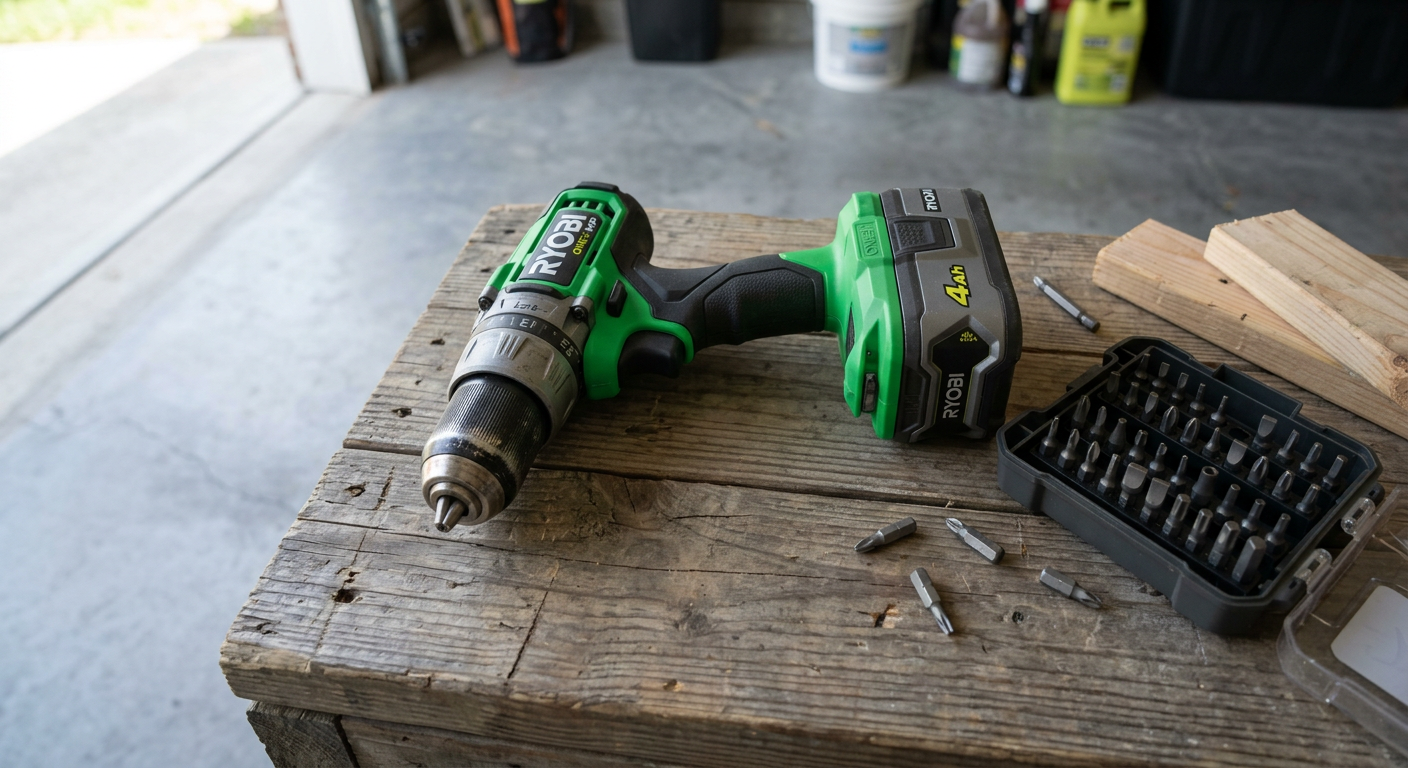
The RYOBI ONE+ HP brushless drill punches way above its price. Here's the honest, no-hype breakdown after months of real DIY projects.
Disclosure: This post may contain affiliate links. If you purchase through one of these links, ProjectPerfectDIY may earn a small commission at no extra cost to you. That never changes our verdict — we only recommend gear we''d actually use ourselves.
If you''re just getting into DIY (or you''ve outgrown the drill your dad handed down in 2009), the RYOBI ONE+ HP brushless drill keeps landing on every "best budget cordless" list on the internet. Fair — but "best budget" reviews usually mean "we unboxed it for 20 minutes." This is what it''s actually like to live with.
I''ve had this drill on the bench for months now. It''s built shelves, sunk deck screws, drilled pilot holes in oak, mixed a bucket of thinset, and driven a lot of pocket-hole screws into pine. Here''s the honest take.
Quick Verdict
- Score: 8.6 / 10
- Best for: Beginners, weekend DIYers, homeowners already on the RYOBI ONE+ battery platform.
- Skip it if: You''re a full-time trades pro running a drill all day — you''ll want a Makita or DeWalt in that case.
- Value: Excellent. Very hard to beat at this price for what you get.
What You Actually Get
The HP line is RYOBI''s brushless upgrade over the older green-and-black ONE+ drills. Brushless matters more than the marketing makes it sound — it runs cooler, lasts longer on a charge, and doesn''t wear down the way old brushed motors do.
Specs that matter:
- 1/2" all-metal chuck (not the plastic one on the older cheaper models)
- 750 in-lbs of torque
- 2-speed gearbox (0–450 / 0–2,100 RPM)
- 24-position clutch
- LED work light that stays on for a couple seconds after the trigger
- Works with every ONE+ 18V battery going back years
That last point is the reason people stay in this ecosystem. If you already own a leaf blower or shop vac on ONE+, batteries slot right in.
Real-World Power
 Torque numbers on paper never tell you much. Here''s what it actually handled without struggling:
- Driving 3" exterior deck screws into pressure-treated 2x — no pilot holes, no complaints.
- 1" spade bit through a doubled-up 2x4 — smooth, didn''t bog down.
- Lag bolts into studs for a heavy shelf install — needed a pilot hole (as you should anyway) but sunk them without cooking the battery.
- Mixing a 5-gallon bucket of thinset with a paddle — this is where cheaper drills die. This one handled it, though I wouldn''t make a habit of it.
Where it does struggle: big self-feed bits (2"+) in hardwood, and really long continuous use like mixing several buckets back-to-back. That''s not what this drill is for.
Battery and Runtime
 I ran mostly the 4Ah HP battery. On a normal project day (assembling a workbench, driving maybe 200 screws, some hole-drilling), I finished with battery to spare. The 2Ah kit battery is fine for small stuff but you''ll want a bigger one within a month if you build regularly.
Charge time on the standard charger is slow-ish — plan on having two batteries in rotation if you build all weekend.
Comfort and Handling
This is where the HP series clearly stepped up from the older RYOBI drills:
- Weight: Balanced. Not featherlight, but you don''t notice it after 30 minutes.
- Grip: The overmold is grippy enough with gloves on. Better than I expected.
- Trigger: Smooth variable speed. Easy to feather when you''re starting a screw and don''t want to strip it.
- LED: Actually bright enough to help. Sits under the chuck so it lights up what you''re drilling into.
The chuck holds bits well and I haven''t had one slip yet. The belt clip is basic but functional.
Where the Corners Got Cut (Being Honest)
- Case: Kit versions come in a bag, not a hard case. Fine for home storage, not great for a truck.
- Charger: The one that ships with most kits is slow. A rapid charger is a worthwhile upgrade.
- Clutch feel: Works fine, but the settings feel a little imprecise compared to Makita/DeWalt.
- Vibration: Not bad, but noticeably more than a $200+ pro drill. You''ll feel it on long jobs.
None of these are dealbreakers at this price. They''re just the honest trade-offs.
Who It''s For
Buy it if you are:
- New to DIY and want a drill that will grow with you.
- A homeowner tackling a few projects a month.
- Already invested in the RYOBI ONE+ battery lineup.
- On a budget but sick of underpowered drills that die on the third screw.
Skip it if you are:
- On a jobsite every day — the extra $80 for a Makita XFD11 or DeWalt DCD800 is worth it in longevity and comfort.
- Running big hole saws, mixing tile daily, or drilling into concrete constantly (get a hammer drill or SDS instead).
Compared to the Competition
If you''re cross-shopping this against a Makita XFD11 or a DeWalt 20V Max XR, the honest answer is: those are better drills. They''re also 60–80% more expensive by the time you buy the kit. For a beginner or weekend builder, that extra money is almost always better spent on a second battery, a good impact driver, or clamps.
For a deeper side-by-side, see our full comparison: Makita vs. RYOBI vs. DEWALT.
FAQ
Is the brushless HP version worth the upgrade over the older RYOBI drill? Yes. The brushless motor alone is worth it — longer runtime, more power, less heat. If you''re starting fresh, don''t bother with the brushed versions.
Will old ONE+ batteries work with it? Yes. Any 18V ONE+ battery works. The newer HP batteries unlock more power, but even a 5-year-old 4Ah battery will run this drill fine.
Does it come with an impact driver? Most kits sell it as a drill + impact driver combo, which is the smart move. A drill alone at this price is fine, but the combo is where the real value lives.
Can it drill into concrete? Not really. It''s a drill/driver, not a hammer drill. For occasional small anchors you can get away with a masonry bit and patience, but for anything serious you want a proper hammer drill.
Bottom Line
The RYOBI ONE+ HP brushless drill is the drill I actually recommend to every beginner who asks. It''s not the best cordless drill made — it''s the best cordless drill made for the money. That distinction matters, because most people don''t need pro-grade tools. They need something that works, keeps working, and doesn''t make them hate the project halfway through.
This one does that. Easy recommendation.
Building your first tool kit? Start with our Essential Power Tools for Beginner DIYers guide.
Tools & Supplies I Recommend
{{product:a80efbf2-f797-4c2b-bc95-862f77305d5c|Top Pick}}
{{product:14671807-2d34-482f-b035-499107387ed0|Compact Pick}}
{{product:751dede6-96a7-4110-a7f1-fcdf67b72184|Best Value Kit}}