
10 Profitable Furniture Flips Under $100
Ten beginner-friendly furniture flips under $100 — plus the tools, prep steps, pricing formula, and listing tips that turn thrifted pieces into real profit.
This post may contain affiliate links. If you purchase through one of these links, Project Perfect DIY may earn a commission at no additional cost to you.
Furniture flipping does not require a fully stocked workshop or hundreds of dollars in supplies. With the right secondhand piece, a few basic materials, and a total project budget under $100, you can turn outdated furniture into something people actually want to buy.
The key is choosing furniture with good bones, avoiding repairs that will drain your budget, and making improvements that create a noticeable transformation.
In this guide, you will find 10 beginner-friendly furniture flips that can be completed for less than $100, along with the tools, materials, safety precautions, pricing strategies, and selling tips that can help you turn your DIY projects into extra income.
What Does "Under $100" Include?
For this guide, the $100 budget includes:
- The original cost of the furniture
- Paint, stain, primer, or finish used for the project
- Sandpaper and other consumable supplies
- Replacement hardware
- Minor repair materials
- Decorative upgrades
Reusable tools such as drills, sanders, clamps, paintbrushes, and screwdrivers are not included in the individual project budget because they can be used for multiple flips.
Your actual cost will depend on what you already own, where you purchase supplies, and whether you find the furniture for free.
Why Budget Furniture Flips Are a Smart Place to Start
Keeping your investment low reduces your financial risk while you learn.
A $20 nightstand with $25 in materials is much easier to profit from than a $150 dresser that requires another $100 in repairs. Smaller, lower-cost projects also give you an opportunity to practice sanding, painting, repairing, staging, and selling before moving on to expensive furniture.
Budget flipping encourages you to:
- Shop more carefully
- Reuse existing hardware
- Choose repairs strategically
- Avoid over-customizing
- Pay attention to local demand
- Track your actual profit
The goal is not simply to make a piece look better. The goal is to make improvements buyers are willing to pay for.
Quick Comparison: 10 Furniture Flips Under $100
| Furniture Flip | Estimated Total Budget | Beginner Difficulty |
|---|---|---|
| Dresser makeover | $45–$100 | Moderate |
| Nightstand or end table | $20–$70 | Easy |
| Coffee table refresh | $25–$85 | Easy |
| Bookshelf makeover | $20–$80 | Easy |
| Dining chair set | $35–$100 | Moderate |
| Small desk makeover | $35–$95 | Moderate |
| Storage trunk refresh | $20–$80 | Easy |
| TV stand or console | $40–$100 | Moderate |
| Entryway bench conversion | $30–$90 | Moderate |
| Bar cart makeover | $25–$85 | Easy |
These are general project ranges. Prices vary by location, furniture condition, and the supplies you choose.
Essential Materials for Budget Furniture Flips
 You do not need every furniture-refinishing product on the market. Start with versatile supplies that can be used across several projects.
Cleaning and Preparation Supplies
- All-purpose cleaner
- Degreaser
- Clean rags
- Sanding sponges
- Sandpaper in multiple grits
- Tack cloth or microfiber cloth
- Painter''s tape
Furniture should be thoroughly cleaned before sanding or painting. Grease, furniture polish, smoke residue, and dirt can prevent paint from bonding properly.
Repair Supplies
- Wood filler
- Wood glue
- Small clamps
- Replacement screws
- Screwdriver set
- Putty knife
Minor scratches, loose joints, and small chips are usually manageable. Major structural damage, severe water damage, or missing custom parts can quickly turn a budget flip into a money pit.
Paint and Finishing Supplies
- Furniture paint
- Primer
- Small foam rollers
- Quality paintbrushes
- Paint trays
- Clear protective topcoat
- Wood stain
- Furniture wax
Use thin, even coats and allow each coat to dry fully. One thick coat rarely saves time. It usually creates drips, uneven texture, and a longer repair session.
Decorative Upgrades
- Cabinet pulls
- Drawer knobs
- Peel-and-stick wallpaper
- Contact paper
- Furniture legs
- Decorative trim
- Stencils
Small details often create the biggest visual improvement. Updated hardware can make a basic dresser or nightstand look significantly more expensive.
Must-Have Tools for Beginners
You can complete many furniture flips with basic hand tools, but a few affordable power tools will save time.
Basic Hand Tools
- Phillips and flathead screwdrivers
- Hammer
- Utility knife
- Tape measure
- Pliers
- Putty knife
- Small level
Helpful Power Tools
- Orbital sander
- Drill/driver
- Shop vacuum
- Brad nailer for advanced projects
A drill/driver and orbital sander are usually the two most useful starter power tools. They reduce prep time and make hardware installation much easier.
Protective Equipment
- Safety glasses
- Work gloves
- Dust mask or respirator
- Hearing protection
- Drop cloth
- Ventilation fan
Do not treat safety equipment as optional. Sanding dust, spray paint, primer, stain, and clear finishes can create irritating or hazardous fumes and particles.
Furniture Flipping Safety
Before beginning any flip, inspect the furniture carefully.
Use Caution With Older Painted Furniture
Older painted pieces can contain lead-based paint. Do not aggressively sand an unknown painted surface until you have considered its age and tested it when appropriate.
Work in a Ventilated Area
Use paint, primer, spray paint, stain, and protective finishes outdoors or in a properly ventilated workspace. Follow the product manufacturer''s instructions.
Protect Yourself From Dust
Wear appropriate respiratory protection when sanding, especially when working with old finishes, damaged particleboard, or unknown coatings.
Dispose of Staining Rags Safely
Rags soaked with oil-based stain or finish can generate heat and create a fire risk. Follow the disposal instructions printed on the product.
Be Careful With Curbside Furniture
Inspect curbside furniture for bedbugs, termites, mold, water damage, rodent damage, strong odors, and structural instability. Avoid upholstered curbside pieces unless you know how to inspect and clean them properly.
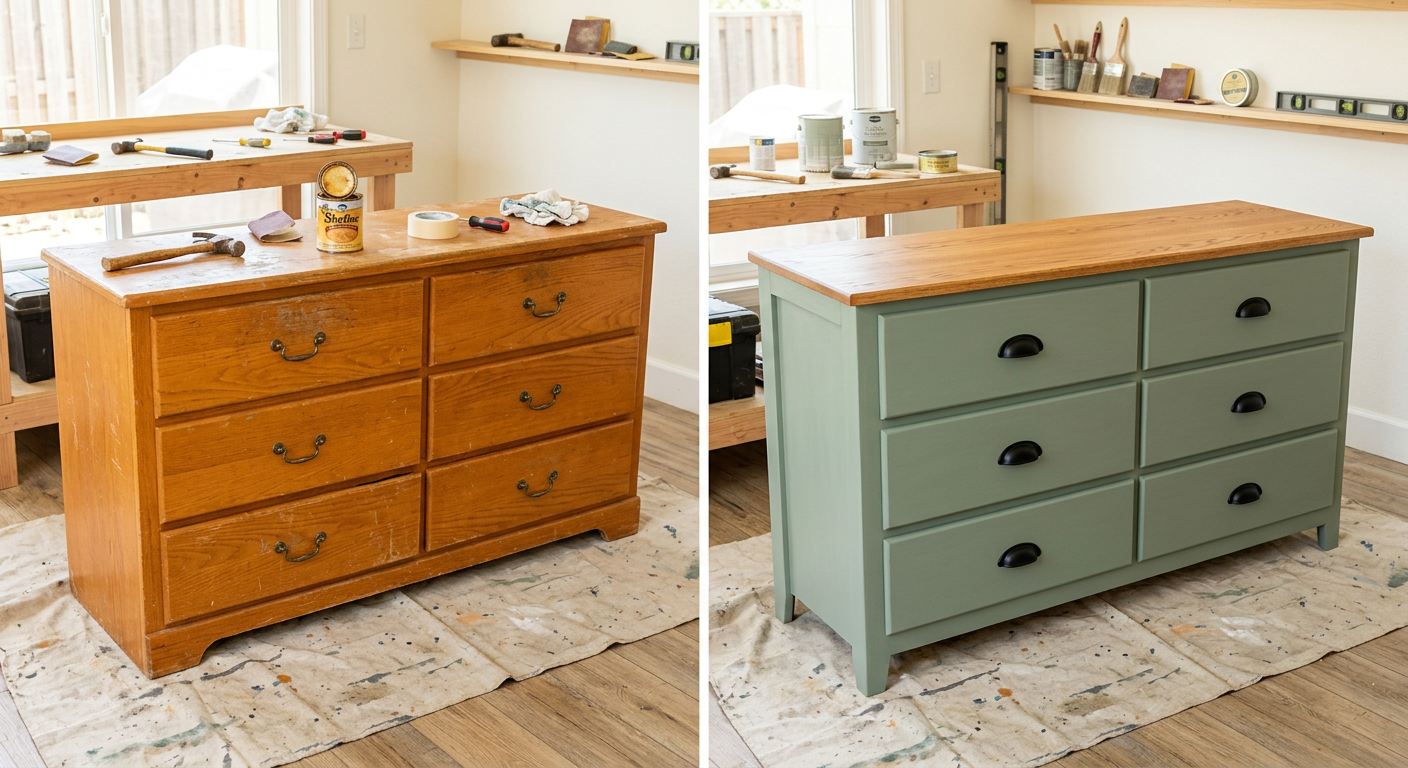
Flip Idea 1: The Classic Dresser Makeover
 Dressers are popular furniture flips because they are useful, highly visible, and easy to customize.
What to Look For
Choose a dresser with a sturdy frame, drawers that open and close properly, minimal water damage, repairable cosmetic flaws, and complete or easily replaceable hardware. Solid wood is ideal, but well-built veneer furniture can also be refinished successfully.
How to Transform It
- Remove all drawers and hardware.
- Clean the entire piece thoroughly.
- Repair loose joints, scratches, and small chips.
- Sand the surface lightly to improve adhesion.
- Apply primer when necessary.
- Paint or stain the dresser.
- Update or repaint the hardware.
- Apply a durable protective topcoat.
Neutral colors such as black, white, warm beige, muted green, and deep blue tend to appeal to a wide range of buyers.
Budget-Saving Tip
Keep the original hardware when possible. A thorough cleaning and a coat of metallic or matte-black spray paint can create a dramatic change without the cost of replacing every pull.
Flip Idea 2: Nightstands and End Tables
Nightstands and end tables are ideal beginner projects because they are smaller, easier to transport, and quicker to complete than full-size dressers.
Pairs usually have stronger resale potential, but a single nightstand can still sell as an end table, printer stand, plant stand, or small storage cabinet.
Easy Upgrade Ideas
- Paint the base and stain the top
- Add a new drawer pull
- Line the drawer with peel-and-stick paper
- Add modern furniture legs
- Create a two-tone finish
- Add a subtle stencil
- Paint matching pieces as a coordinated pair
Budget-Saving Tip
Look for mismatched tables with similar dimensions. Painting them the same color and adding matching hardware can make them look like an intentional set.
Flip Idea 3: Coffee Table Refresh
 Coffee tables are commonly available at thrift stores, garage sales, and online marketplaces. Many only need cosmetic updates.
What to Avoid
Skip tables with severe water swelling, deep structural cracks, missing glass inserts that are expensive to replace, legs that cannot be stabilized, or heavy smoke or pet odors.
Transformation Options
- Paint the base and refinish the top
- Create a faux wood finish
- Add a lower storage shelf
- Replace damaged legs
- Add decorative trim
- Convert a dated table into a modern two-tone piece
Budget-Saving Tip
A worn tabletop does not always need to be completely stripped. Depending on the finish, a thorough cleaning, light sanding, bonding primer, and durable paint can produce a strong result.
Flip Idea 4: Bookshelf Makeover
Bookshelves are versatile and easy to stage. Buyers can use them in bedrooms, offices, living rooms, kitchens, or children''s spaces.
Easy Upgrade Ideas
- Paint the frame
- Add wallpaper to the back panel
- Add trim to the front edges
- Replace a damaged backing board
- Add short furniture legs
- Convert shelves into adjustable storage
- Add baskets for staging photographs
Budget-Saving Tip
Use a small amount of peel-and-stick wallpaper only on the back panel instead of covering the entire bookshelf. It adds visual interest without using much material.
Flip Idea 5: Dining Chair Set Refresh
Dining chairs can be profitable when purchased as a matching set. They also provide several opportunities for cosmetic improvement.
Inspect Before Buying
Check for loose joints, cracked legs, missing screws, damaged seats, torn upholstery, strong odors, and wobbly frames. Do not rely on paint to disguise structural problems. A chair must be safe enough to support a person.
Transformation Options
- Paint the frames
- Refinish the wood seats
- Replace removable seat fabric
- Add new foam and upholstery
- Create a coordinated mismatched set
- Sell chairs individually as desk or accent chairs
Budget-Saving Tip
Fabric remnants can be enough to recover several chair seats and often cost less than purchasing fabric by the yard.
Flip Idea 6: Small Desk Makeover
Small desks are popular with students, remote workers, renters, and anyone creating a compact home office.
What to Look For
Choose desks with a manageable size, functional drawers, a stable writing surface, minor cosmetic damage, and simple hardware. Large executive desks can be difficult to transport and harder to sell. Compact desks appeal to more buyers.
Upgrade Ideas
- Paint the base and stain the top
- Add modern drawer pulls
- Line the drawers
- Add a cable-management opening
- Repair and repaint a keyboard tray
- Pair the desk with a refinished chair
Budget-Saving Tip
Avoid adding expensive decorative features that reduce the desk''s usefulness. Buyers generally care more about storage, stability, clean drawers, and a smooth work surface.
Flip Idea 7: Storage Trunk Makeover
Storage trunks, blanket chests, and toy boxes can be transformed into functional accent pieces.
Possible Uses
A refinished trunk can be marketed as blanket storage, entryway storage, toy storage, coffee-table storage, bedroom storage, or a decorative accent piece.
Upgrade Ideas
- Paint the exterior
- Refinish the lid
- Add new hinges
- Install handles
- Add furniture feet
- Line the interior
- Add a soft-close lid support
Important Safety Note
Toy boxes and storage trunks should not have heavy lids that can slam shut. Consider installing an appropriate lid support when the piece could be used around children.
Flip Idea 8: TV Stand or Console Makeover
Older entertainment centers are often too large for modern televisions, but smaller TV stands and console tables remain useful.
What Buyers Usually Want
- Cord-management openings
- Storage for electronics
- Adjustable shelves
- Functional doors
- A clean, modern finish
- A size that is easy to transport
Transformation Options
- Remove outdated doors
- Add open shelving
- Replace solid door panels with cane webbing
- Paint the frame
- Refinish the top
- Update knobs and hinges
- Add furniture legs
Budget-Saving Tip
Changing the hardware and removing one dated decorative element can produce a bigger improvement than rebuilding the entire piece.
Flip Idea 9: Entryway Bench Conversion
A small cabinet, low bookshelf, or sturdy coffee table can sometimes be converted into an entryway bench.
Possible Features
- Shoe storage
- Baskets
- Hooks
- A removable cushion
- Open cubbies
- Hidden storage
Basic Conversion Plan
- Confirm the piece can safely support weight.
- Reinforce weak joints.
- Sand and clean the surface.
- Paint or stain the frame.
- Add baskets or storage bins.
- Add a cushion if appropriate.
Important Safety Note
Do not market converted furniture as seating unless it has been properly reinforced and tested. A shelf that looks bench-sized is not automatically strong enough to become a bench.
Flip Idea 10: Bar Cart Makeover
 Bar carts and rolling utility carts are compact, decorative, and easy to customize.
They can also be marketed for several uses beyond alcohol storage, including a coffee station, plant cart, bathroom storage, craft cart, kitchen storage, beauty supply organizer, or mobile office storage.
Upgrade Ideas
- Spray paint the frame
- Refinish wood shelves
- Add peel-and-stick material to trays
- Replace damaged wheels
- Add handles
- Create a metallic finish
- Style it for multiple uses
Budget-Saving Tip
When listing the finished cart, show more than one possible use. Buyers are more likely to see value when the furniture can work in several rooms.
How to Choose Furniture That Will Actually Sell
A low purchase price does not automatically make an item a good flip.
Before buying, ask:
- Is the piece structurally sound?
- Can I transport it?
- Is the size practical for most buyers?
- Are the repairs within my skill level?
- Can replacement parts be found easily?
- Is this style selling in my local market?
- Can I complete the project without exceeding my budget?
- Is there enough potential profit to justify the work?
A free piece that requires extensive repairs can cost more than a $30 piece in good condition.
Research Your Local Market Before You Buy
Search Facebook Marketplace, Craigslist, local resale groups, and other selling platforms before committing to a project.
Look at similar furniture styles, common colors, listing prices, how long listings remain active, which items are marked sold, popular sizes, and whether buyers prefer delivery.
Do not rely only on listings with high asking prices. An asking price is not proof that the furniture sold for that amount.
How to Calculate Your Furniture-Flipping Price
Do not price furniture using materials alone.
Use this basic formula:
Furniture cost + materials + selling expenses + labor target + desired profit = minimum selling price
For example:
- Furniture purchase: $20
- Paint and supplies used: $30
- Replacement hardware: $15
- Selling or delivery expenses: $10
- Labor target: $50
- Desired profit: $50
Minimum target price: $175
Then compare that number with similar furniture in your local market. If comparable pieces only sell for $100, the project does not support your desired profit.
This calculation is why researching before buying matters.
Keep Track of Every Expense
Furniture flippers often underestimate their costs because they ignore small purchases.
Track purchase price, fuel or transportation, paint, primer, sandpaper, hardware, wood filler, glue, decorative materials, listing fees, delivery costs, and time spent on the project.
A project can generate cash without generating much profit. The numbers tell you the difference.
Preparation Determines the Final Result
Good furniture flipping is not simply painting over an old surface.
Proper preparation usually includes:
- Inspecting the furniture
- Removing hardware
- Cleaning thoroughly
- Repairing damage
- Sanding or deglossing
- Removing dust
- Priming when necessary
- Applying thin coats
- Allowing proper drying time
- Protecting the finish
Skipping preparation can cause peeling paint, visible grease, rough texture, and poor durability.
Use a Durable Protective Finish
Furniture that will receive frequent use usually needs a protective finish. Common options include water-based polyurethane, polycrylic, furniture wax, oil-based polyurethane, and furniture-specific topcoats.
Choose a finish that is compatible with the paint or stain you used. Follow the drying and curing instructions carefully.
Paint can feel dry before it is fully cured. Selling or staging furniture too soon can result in scratches, dents, or objects sticking to the surface.
Photography Tips That Help Furniture Sell
Strong photographs can make the difference between a listing that sells and one that gets ignored.
Use Good Lighting
Natural daylight usually creates the clearest images. Avoid dark garages, harsh flash, and strong shadows.
Clean the Background
Remove tools, trash, vehicles, laundry, paint cans, and unrelated furniture from the background. The buyer should notice the furniture—not your entire project history scattered around it.
Stage the Piece
Use a few simple items such as a plant, a lamp, books, a mirror, neutral décor, folded blankets, or storage baskets. Do not cover so much of the piece that buyers cannot see its surface.
Photograph Important Details
Include photographs of the front, both sides, the top, the interior, drawers, hardware, special features, and any remaining imperfections. Honest photographs reduce wasted messages and help buyers feel more confident.
How to Write a Better Furniture Listing
A strong listing should include furniture type, style, color, dimensions, materials, storage features, repairs completed, new hardware or upgrades, condition, and pickup or delivery information.
Example:
Refinished three-drawer nightstand painted in a soft matte black with new brushed-gold hardware. Drawers open smoothly and have been cleaned and lined. Sealed with a durable protective topcoat. Measures 26 inches tall, 22 inches wide, and 16 inches deep. Pickup available in the listed area.
Avoid vague listings such as:
Cute dresser. Redone. Serious buyers only.
Buyers need enough information to decide whether the furniture will fit their room and meet their needs.
Common Furniture-Flipping Mistakes
Buying Furniture With Major Damage
Cosmetic damage is manageable. Severe mold, water swelling, broken frames, missing custom parts, and pest damage are usually not worth the risk.
Skipping the Cleaning Step
Sanding dirty furniture can grind grease and residue deeper into the surface.
Using Too Much Paint
Thick coats take longer to dry and are more likely to drip, wrinkle, or chip.
Choosing Extremely Personal Designs
A highly specific color or pattern can reduce the number of potential buyers. Save bold experiments for inexpensive pieces or custom orders.
Ignoring Drying and Curing Times
A finish that feels dry can still be soft underneath.
Underpricing Your Work
Low pricing can attract buyers quickly, but it can also erase your profit and make the project unsustainable.
Overpricing Based on Emotion
The number of hours you spent does not automatically determine what the local market will pay. Use your cost calculation and comparable listings together.
Frequently Asked Questions
What type of furniture is best for beginners?
Nightstands, end tables, coffee tables, small bookshelves, and simple desks are usually good beginner projects. They are easier to move, require fewer materials, and can be completed relatively quickly.
Should I only buy solid wood furniture?
Solid wood is often easier to repair and refinish, but it is not the only option. Quality veneer and laminate furniture can also be updated when the surface is intact and properly prepared. Avoid particleboard that is swollen, crumbling, or severely water damaged.
Where can I find furniture for under $100?
Look at Facebook Marketplace, Craigslist, garage sales, estate sales, thrift stores, local resale groups, community cleanups, curb alerts, friends and family, and property cleanouts. Check new listings frequently and be prepared to pick up good pieces quickly.
Should I repaint old hardware or replace it?
Repaint hardware when it is complete, functional, and matches the style of the furniture. Replace it when it is broken, missing, severely rusted, difficult to clean, or visually outdated in a way paint cannot fix. Always measure the distance between existing hardware holes before ordering replacements.
What colors sell best?
Neutral and muted colors generally appeal to the widest audience. Black, white, warm beige, deep blue, muted green, and natural wood tones are common choices. Local demand matters more than any universal trend. Research similar listings in your area before choosing a finish.
How much profit can I make flipping furniture?
Profit depends on the original cost, materials, local market, furniture size, project quality, and how efficiently you work. Your actual profit is selling price minus all expenses. Track every project so you can identify which furniture types provide the best return for your time.
Do I need expensive paint?
No. Proper surface preparation and application are often more important than buying the most expensive paint available. Choose paint designed or suitable for furniture, follow the manufacturer''s directions, and protect the finish when necessary.
Tools & Supplies I Recommend
{{product:19a3c1ce-008a-4480-bda3-dd651a85d7fb|Top Pick}}
{{product:69547dda-c55d-4c5b-84f7-a4e93a036730|Budget Pick}}
{{product:d0c91fbd-9e02-4a6e-9b84-bbcf75b6aa4b|Upgrade Pick}}
Final Thoughts
Furniture flipping can be a practical way to improve your DIY skills, build a portfolio, furnish your own home affordably, or create an additional income stream.
Start with a small, structurally sound piece. Keep your first project simple. Track every expense, research your local market, and focus on clean preparation rather than complicated decorative techniques.
You do not need a perfect workshop or a huge supply budget. You need a good piece, a realistic plan, and enough patience to complete each step properly.
That forgotten nightstand, dated dresser, or scratched coffee table could be your first profitable flip.
Share your completed transformations using #ProjectPerfectDIY so we can see what you create.